Well, I finally started taking some official Japanese Language Proficiency Test practice mini-quizzes to assess where I’m at. I’ve been studying Japanese off and on for the last decade, but my inconsistency meant that I had forgotten half of what I had “learned” each time I resumed good study habits.
All in all, not too bad:
9/14 is pretty reflective of where I am, with me failing most of the listening component. I’m also trying to review a lot of test-related vocabulary so I don’t continue to be confused by certain kinds of instructions.
I’ve set a personal goal of taking the N5 level test in 2021. For those unfamiliar, it’s offered twice a year for those living in America, and only at select sites. I’ll likely have to drive to Arkansas to take it, so we may very well make a vacation out of it and spend a few days there.
One of the current weaknesses I’m noticing is that I haven’t paid attention to the specific details of the kanji characters I’ve been studying. Several of the test questions have tiny extra (or missing) brush strokes. It’s like those “which picture is different” games you saw in the Highlights magazine as a child, except there is only one right answer and you must already know it ahead of time.
Listening is tough because I’m also realizing that my question-related vocabulary, such as “which person” or “which one” or “which place” is not as firmly cemented in my mind as I had previously thought.
I’m going to do my best, and I hope the rest of you who are language learners will do so too!
Sometimes I reflect on my own life and theological journey and I can’t help but wonder: “What if I’m wrong?” I wrote previously about putting “skin in the game,” so to speak, but that can only happen if people are willing to consider possible error in their beliefs. Many people on all places in the faith & human sexuality spectrum intentionally dodge this possibility, despite its relevance and importance to a sound theological framework. The depth of humility, courage, and trust needed to undergo this kind of journey is one that only God can support, because poking and prodding at the bedrock of one’s faith can cause the existing framework to break down completely. For now, I’m exploring the what ifs of a conservative viewpoint on faith & human sexuality, though I do also have future plans to discuss the same topic from a more progressive perspective as well.
Growing up, conservative American Christianity presented the idea to child and teenage me that questions and doubt are unfortunate byproducts of the fallen, human condition, merely phases that people quickly pass through on their way to unwavering faith in Christ (which in reality meant “towing the conservative party line” by agreeing with a very specific set of theological beliefs). The unintended consequence of this thought process was that it encouraged rationalizing away honest, valid theological concerns in favor of constructing air-tight arguments for or against whatever “issue” was being discussed, devoid of any real-world experience or practical information. I lived in a theological ivory tower, and without meaning to, I looked down upon all those who were not privileged to have the “truth” like I did.
One of the hallmarks of this mindset (which is still quite popular in America) is advocating for strict certainty of belief. The measure of one’s faith is the strength (and sometimes the frequency) of vocal reinforcement for specific theological viewpoints. While I do not doubt the Holy Spirit is at work in all believers, I can’t help but wonder how often its voice is silenced or dismissed because it challenges the status quo. I now am inspired by the many passages in the New Testament where the leaders of the early Christian faith struggle to balance Jesus’s Spirit-filled words and teachings with the existing laws and traditions of Judaism. Interestingly enough, rabbinic tradition in Judaism still deeply values and encourages questioning and investigation regarding the application of Scripture, but this has largely been lost by conservative American Christianity.
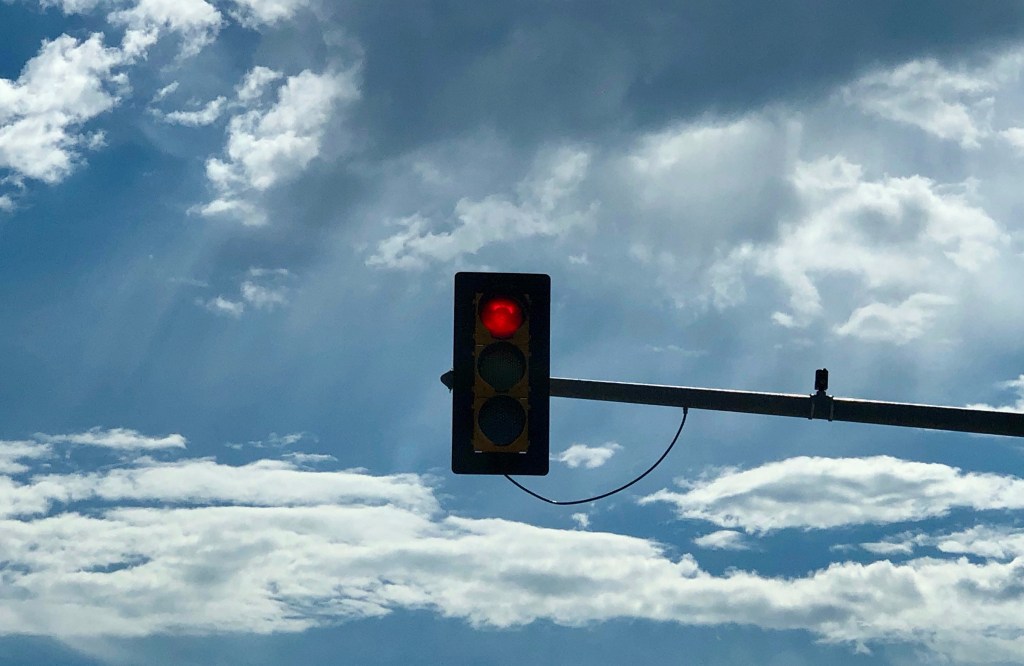
For so long, conservative American Christianity has directed most of its energy to maintaining a theological red light for LGBTQIA+ persons that they’ve lost the ability to connect with them. In fact, many conservative Christians have become so uncomfortable with LGBTQIA+ persons that they have become uncomfortable talking about human sexuality in general. While many conservative American Christians are able to have endless dialogue about the nature of the Trinity, the problem of evil in the world, etc., very few are able to have educated discourse about faith & human sexuality and even fewer are willing to have educated discourse about it.
Recently I heard a well-intentioned Christian at my church explain how he feels compelled to call out (what he perceives as) sin in others because the Bible tells him to do so. He draws a very firm line in the sand regarding faith & human sexuality, and was upset that there could even be sadness for mistreatment of LGBTQIA+ persons. Most likely this hard-line approach is based upon Matthew 18:15, but that passage refers to sinning specifically against a fellow believer and not categorical assumption of sin for an entire group of people. There are several other important Scripture passages that do refer to helping a fellow believer turn away from sinning, but none of them involve casting judgment. It’s as if many conservative American Christians are stuck in the name-calling and tattle-tale phase of childhood, pointing fingers at those around them who they don’t like.
Rejoice always, pray constantly, give thanks in all circumstances; for this is the will of God in Christ Jesus for you.
Do not quench the Spirit, do not despise prophesying, but test everything; hold fast what is good, abstain from every form of evil.
May the God of peace himself sanctify you wholly; and may your spirit and soul and body be kept sound and blameless at the coming of our Lord Jesus Christ. He who calls you is faithful, and he will do it.
1 Thessalonians 5:16-24, Revised Standard Version
The hope I see in 1 Thessalonians is the blunt reminder not to stifle the work of the Holy Spirit or look down upon those who share a new vision of God’s working in the world. The passage rightly challenges us to test rather than to reject outright in favor of upholding existing tradition, and it also prompts evaluation of the impact our beliefs and actions have on those around us.
Contrary to what is expected, I actually do covet prayers from conservative, heterosexual Christians. But the kind of prayer I desire is much different from what is actually being prayed. Couldn’t we all pray for the Holy Spirit to be at work in believers, even those who are LGBTQIA+? And will we trust the Holy Spirit to convict, rather than convicting others ourselves? Or, will we continue to use prayer as a weapon of distance and judgment: “Dear God, please help them see how wrong they are.”
So, what if conservative American Christians are wrong in their assessment of LGBTQIA+ persons?
They are covered in the blood spilled by LGBTQIA+ persons who have taken their own lives. The fruit of conservative teachings on human sexuality is by its very nature isolating and the climate of current conservative American Christianity also makes it hopeless. Celebrating heterosexual marriage and holding it high on a pedestal implies that singles are neither whole nor fully able to do God’s work unless they have a spouse. The natural consequence of this is despair on the part of LGBTQIA+ persons as they are explicitly excluded from the life-giving companionship that marriage provides. As I discussed in a previous post, the social isolation encountered by LGBTQIA+ persons in the church as well as society at large is a huge factor in their mental, emotional, and spiritual health. When families disown and cast out their very own children for demonstrating honesty and vulnerability in coming out to them, something is wrong. When we immediately condemn LGBTQIA+ persons to eternal torment as a gut reaction scare tactic after a coming out conversation, something is wrong. When the only hope left for an LGBTQIA+ person is physical death (to free their soul from their earthly body) and conservative Christians stand by and do nothing, something is wrong.
They will be held directly accountable by God for pushing others away from Him. The false distinction between attraction and action (“love the sinner, hate the sin”) is a predominant belief among conservative American Christians. However, the Bible states that what exists in the heart is just as culpable as what is acted out. The double standard by which the church encourages heterosexual teenagers to discover, explore, celebrate, and focus their innate attractions toward marriage but then interrogates and reprimands LGBTQIA+ teens for the exact same thing teaches LGBTQIA+ Christians that their very existence and nature is an affront to God. When you are shown by the actions of others that it is impossible for God to love you unless you change a core part of yourself (that no one else has to change), you cease to follow God and instead become obsessed with finding ways to change what very well may be immutable in order to please the people around you. When the words and actions of conservative believers are mired in this kind of hypocrisy, something is wrong. When conservative believers lay extra, unique conditions onto LGBTQIA+ Christians that obfuscate the heart of Jesus, something is wrong.
They have sinned by being selective about helping marginalized LGBTQIA+ persons. The unintentional, dripping irony of this statement is that the very sin of Sodom, as recorded in Ezekiel 16:49, is that its people had extensive earthly resources as well as social/religious privilege but yet did not care for those around them who needed the most help and support. When conservative believers withhold spiritual community as punishment for LGBTQIA+ Christians who are honest about their orientation or actions, something is wrong. When conservative believers develop provisionary relationships with LGBTQIA+ Christians that are contingent on continued “Christian” counseling to change sexual orientation, something is wrong. When conservative believers distantly lament LGBTQIA+ persons who experience substance abuse issues, homelessness, or discrimination while simultaneously issuing warnings about the supposedly unavoidable consequences of “the lifestyle,” something is wrong.
Dear God, please help us all to seek wisdom and discernment regarding the implications and consequences of both our actions and our beliefs.
All too often I read articles by conservative, American Christians who lament the progress our country has made toward equal treatment and rights for LGBTQIA+ persons: the assumption is that there was some kind of golden era where this “agenda” wasn’t dominating the discussion in religious and political circles. This thought process defers to silence rather than meaningful dialogue with real people who are made in the image of God, and it unintentionally (or perhaps intentionally?) shoos away nuanced, complicated questions that LGBTQIA+ Christians face on a daily basis.
My husband, children, and I have attended a Methodist Church for the past year and a half, and while I was disappointed by the end result of the recent (special) General Conference 2019 on the topic of same-gender marriage rites and ordination of LGBTQIA+ folks, I was not at all surprised. Those who would strengthen restrictive language in the church’s Book of Discipline against LGBTQIA+ persons won the day, but by a slim margin. Since 1972, (when the Methodist Church, and several other denominations as well, added language to their denominational constitutions) human sexuality has received attention every 4 years at worldwide denominational meetings.
Here’s the rub, though: If conservative, American Christians are so adamant about restricting LGBTQIA+ Christians out of “love,” why won’t they put their money where their mouth is?
To this day, despite strong language condemning “the practice of homosexuality,” most denominations have no resources designed to support and encourage the spiritual, emotional, romantic, and sexual healthiness of LGBTQIA+ Christians. ZERO. The closest conservative resource I have seen to date from a denomination is a lengthy document from the Christian Reformed Church in America (CRC, Dutch origin), but even that encourages orientation change as the “best” option. In the United Methodist denomination, we have been debating human sexuality for close to 50 years, but no intentional effort appears to have been put into educational curriculum for dialogue/small group study, counseling, or even for pastors. I posted previously about the unhealthy, harmful consequences of much of the theology and practical treatment of LGBTQIA+ persons. So where are the conservative Christians who are stepping up to the plate to support their LGBTQIA+ Christian brothers and sisters?
Practically speaking, it is entirely fair and in good conscience for LGBTQIA+ Christians to ask the following of conservative, American Christians:
If your theology requires chastity at all costs, will you withhold words of harsh condemnation and instead love me and hold me when I fail, just as you would for your straight friends or family? Will you forgive me when I have multiple “encounters” over the course of my lifetime, because it’s not actively “living in sin” like same-gender marriage would be? Will you refrain from speaking personal words or promoting church activities that celebrate and actively encourage heterosexuality because you know it creates more pain by highlighting my difference?
If your theology requires lifelong celibacy, will your family take me into your home and love me daily as immediate family, as a substitute for the companionship your theology denies me? Will you help dismantle the idol of marriage that is present in many conservative, American churches? Will you help re-focus singles ministries within the church away from the dating scene and instead promote ministry that will encourage and support celibate people in a sustaining and life-giving way?
If your theology silences the struggles of LGBTQIA+ people because it’s an uncomfortable topic, will you speak up for those in your congregation who are hurting? Will you sit down with me over coffee and just listen, without formulating your next rebuttal? Will you invite me over for dinner without the intention to toss Bible verses at me? Will you pray with me and not just about me? Will you be seen talking to me at church? Sitting with me during worship? Will you laugh with me, without fear that people might assume there is some attraction between us?
If your theology directly equates salvation with lifelong celibacy, will you commit to crying out to God with me? Will you just be with me as I scream in frustration and question God’s goodness? Will you help me avoid coping mechanisms that might push me further away from God? Will you help me celebrate the good things I have in my life, even the little things, so I don’t forget that life is worth living and that hope exists for people like me?
If your theology requires orientation change and I simply cannot despite efforts made in good faith, will you actively listen to my daily struggles, invite me to pray with you, and still include me in the life of the church? Will you resist the urge to discredit my Christian faith and call into question my prayer life and Scripture reading routine? Will you address my financial needs if I have paid thousands of dollars for “Christian” conversion therapy at your request? Will you defend my faith when others call it into question? If you want me to marry the opposite gender as an orientation “fix,” will you give me your own son or daughter’s hand in marriage?
If your theology prohibits me from being involved in ministry of any kind, will you believe me when I tell you I’ve always sensed a calling to it? Will you celebrate the gifts with which God has equipped me? Will you find or create other avenues for me to use those gifts and to thrive in the life and ministry of the church? Will you stick up for me when others disparage Kingdom work I’ve done in the past, before I came out? Will you help others to realize that I’m still the same person now?
If your theology prevents me from ministering to the children or youth of the church because of my sexuality, will you remember that some of these very children or youth may be LGBTQIA+ Christians themselves? Will you acknowledge that my sexuality may actually be a gifting from God to minister to kids who are just coming to terms with their own sexuality? Can you resist the urge to stereotype and slander me by equating my desire for companionship and love with sexual perversity with minors? Will you help me when I am anxious and worried about perceptions by reminding me that you still trust me as well as the Holy Spirit’s work through me?
I truly hope that conservative, American Christians will invest their time and effort into thoughtful, nuanced documents, treatises, resources, and educational curriculum for these topics (even if they changed their minds in the process). Until this happens, the willful inaction of conservative, American Christians will continue to push LGBTQIA+ Christians out of the church and away from the very God who created them and loves them.
I am a huge believer in facing consequences, both as a parent, and as a theologian. With regards to topics of human sexuality and faith, most conservative, American Christians have not addressed the consequences of their restrictive theology. Scripture tells us that we can assess a teaching based on the fruit that it bears:
“Watch out for false prophets. They come to you in sheep’s clothing, but inwardly they are ferocious wolves. By their fruit you will recognize them. Do people pick grapes from thornbushes, or figs from thistles? Likewise, every good tree bears good fruit, but a bad tree bears bad fruit. A good tree cannot bear bad fruit, and a bad tree cannot bear good fruit. Every tree that does not bear good fruit is cut down and thrown into the fire. Thus, by their fruit you will recognize them.”
Matthew 7: 15-20, New International Version
What bothers me is how quickly conservative, American Christians are to declare LGBTQIA+ persons categorically sinful because of their sexuality, without any kind of existing relationship with them. This willful ignorance runs contrary to the gospel and to the teachings of Jesus. Beyond the theology, the poor treatment of LGBTQIA+ Christians by fellow believers is sin because forgets the very heart of Jesus’s radical inclusivity:
“But do not do what they do, for they do not practice what they preach. They tie up heavy, cumbersome loads and put them on other people’s shoulders, but they themselves are not willing to lift a finger to move them.”
Matthew 23: 3-4, New International Version
Below are some of the most common expressions of restrictive conservative, American theology of “homosexuality” and their impact on LGBTQIA+ Christians:
You must always be chaste…because any sexual activity is taken as further proof of your active rebellion against God. You must bear the shame of any sexual activity in silence out of fear of being excommunicated from your church. You’ll feel shameful and dirty because while opposite-gender attraction is actively encouraged in youth group, singles groups, and church in general, your desires will be seen as perverse and against the intent of God’s creation.
You must be celibate for the rest of your life…because your inherent desire for love reflects “the fall” in Genesis and is so inherently flawed and disordered that it must be fought at all costs. Well-meaning church discussions of family, marriage, or relationships may trigger grief, shame, or depression because you are automatically excluded, de facto. While others talk and dream of finding significant others, you stifle these same dreams in yourself and become more lonely the older you grow. No one can truly relate to your struggles, and most of your friends will marry and begin families of their own, leaving you in isolation.
You must not complain about your station in life…because “everyone has their crosses to bear.” Few people will speak to you outside of occasional social formalities. You’ll wonder if you should even go to church any more because of the silent stares. You’ll slowly stop being invited to coffee or over for dinner once people become aware of your sexuality. Few people will sit next to you in worship, Sunday school, or at church meals, and you’ll constantly have a nagging inner debate about whether it’s because of your sexuality or just poor social awareness on the part of others.
Your salvation depends on your ability to remain celibate for life…because your very existence is an affront to God. You may become isolated and suicidal because developing a deep relationship with another person could lead to “temptation.” You may become angry and wonder why God placed such a difficult burden on you. You will find ways to numb yourself inside, which may lead to bad habits that warrant further judgment from fellow Christians. Instead of being hopeful for the future, you will find yourself looking forward to death, so your soul can be freed from your wretched body.
You must change your sexual orientation to be worthy before God…because you cannot be LGBTQIA+ and be Christian. Your faith will begin to crumble as you find it impossible to change your orientation and you are told that you didn’t try hard enough, pray enough, read Scripture enough, or pay for enough “Christian” conversion therapy. The very same Christians who promised support when you professed faith in Christ (and later, promised the same when you cautiously came out to them) will turn on you and declare that you were a wolf in sheep’s clothing and never a “real” Christian in the first place.
You may not be involved in ministry leadership…because your very existence reflects active rebellion against God. Even if you are not sexually active, you may be asked to step down as a pastor, removed from worship band, or quietly relieved of whatever other church duties you have. You find out that if you had kept your orientation a secret, your ministry opportunities would have continued for as long as you lived a lie. Your previous ministry successes may be attributed to your faith before you chose to reject God and embrace sin.
You may not be involved with children or youth at church…because gay people are pedophiles and will also try to recruit children into the “lifestyle.” You may get suspicious glances from adults when you speak with youth, and you will develop acute anxiety any time you find yourself alone with a youth out of fear of being accused of impropriety.
Is it any wonder, then, that LGBTQIA+ people are likely to feel unwelcome in church? And likely to experience mental, emotional, and spiritual health crises? And to consider self-harm or suicide because of the very people who were supposed to reflect and demonstrate God’s love for them? What does God want from conservative Christians who lay these expectations upon LGBTQIA+ Christians?
I firmly believe that God creates all humans with an innate desire for relationship: first with Himself, and secondly with other humans. We see this reflected overtly and covertly throughout Scripture. Growing up in the church can nourish and foster these God-given desires in ways that embody the best of what God intended for humanity. Celebrating the kinship of family, creating congregational community, nurturing personal friendships, and honoring lifelong commitment through marriage are all amazing expressions of humanity’s innate desire that are modeled within the church. However, what begins as a life-giving experience in childhood suddenly turns to cruelty when an LGBTQIA+ Christian teen comes out. This same God-given desire for relationship is suddenly shamed and declared irreparably corrupt. In fact, many family members, friends, and churches suddenly begin withholding or severing the very relationships that are meant to nourish and support. Even if a teen is a virgin and is simply trying to reconcile their sexuality with their faith, they are effectively isolated from the very people who vowed to journey with them during their profession of faith. The spiritual, emotional, and mental harm from this shunning is tangible, and in some cases, leads to loss of faith and even self-harm.
One of my hopes and dreams for the Western Christian church is that it will at some point celebrate difficult questions as a way to lean into God and engage in Christ-centered discernment. In my previous post, I discussed nuance and how complicated questions from LGBTQIA+ Christians merit consideration by the heterosexual majority. Americans in particular seem to be fixated with binary answers: yes or no, black or white, this or that, but certainly nothing that resembles in-between. Unfortunately, this socio-cultural tendency has infiltrated many Western Christian churches over the past several decades. These same kinds of struggles are evident in the New Testament in both Romans and Acts, where the early Christian church struggled to know what to do with “the others” (Gentiles). In these books, I read about Christ’s desire for faith as well as spiritual unity despite differences. The behavior of many conservative Western Christians unfortunately stands in stark contrast to Romans and Acts. The difficult questions are a chance for us to grow together and lean into God for wisdom. It’s part of the ongoing sanctification process that Christ is working in all believers.
Below are several complicated scenarios facing LGBTQIA+ Christians that defy an “easy” answer. Hopefully, these will inspire both self-reflection and earnest prayers of discernment. Giving time and space to ponder the implications of each statement and pray accordingly is difficult because of the tendency to formulate a response before finishing reading. Are we able to take on the perspective of “the other” in faith that the Holy Spirit might speak to us too?
Question 1:
Genesis 2 is a difficult chapter for me to read, particularly God’s statement that it isn’t good for humans to be alone. I’ve struggled with feelings of isolation and loneliness since becoming aware of my sexuality, and I long for the companionship described in this passage. For Adam, God creates a “helpmate” to help remedy this loneliness in Genesis 2:18. Later, in Genesis 2:23-25, Scripture actually highlights the sameness between Adam and Eve (rather than biological difference) and then highlights the importance of marriage in creating kinship. In the time since this Scripture was written, the Abrahamic covenant to be fruitful and multiply has been fulfilled through the coming and teachings of Jesus. The church seems to place heterosexual marriage on a pedestal, but I’m not sure marrying the opposite gender would be wise for me because I’m bisexual. Many family members and friends disapprove of me, but I don’t think they even really understand what I’m experiencing. I haven’t even been sexually active at all, but I am physically attracted to men, while being romantically, emotionally, and spiritually attracted to only girls. What sort of suitable helpmate will God provide for me in my loneliness, given my sexuality?
Question 2:
In 1 Corinthians 7, the apostle Paul states he is gifted in the vocations of both chastity and lifelong celibacy, but he specifically acknowledges that every person has been given different gifts by God. He also acknowledges that the physical aspect of sexuality (and the corresponding self-control) must be a factor in the decision between lifelong celibacy and marriage. Most notably, however, Paul explicitly states that marriage is an acceptable option for those who do not thrive in the pursuit of chastity and lifelong celibacy. As a gay Christian, I’m a bit confused about how to proceed in my life because while I am chaste, it is a daily struggle. I’m attracted exclusively to others of the same gender, not just physically, but also romantically, spiritually, and emotionally. I’ve been praying for God’s guidance through the work of the Holy Spirit but I also don’t feel a gifting or equipping to pursue life-long celibacy, even though other Christians tell me I must. If I don’t discern a call to the vocation of celibacy, should I marry someone of the same gender to be faithful to what Scripture says? What about the companionship that marriage provides? Why am I excluded from that?
Question 3:
Growing up, I never felt very boyish despite doing all the typical boy things. When I was twelve, I started growing breasts and ever since then, I’ve been hiding my body and trying to wear baggy clothing. After my parents found out, we visited a doctor who started using the word “intersex” to describe my experience. We got some genetic testing done, but now my parents don’t really hug me much any more. When we talked with my pastor at church, he said I shouldn’t ever talk about this with anyone else because it might upset them. I feel like a freak because I have boy parts down there, breasts, and XX chromosomes. In Matthew 19:12, Jesus talks about eunuchs who were born this way, and he allows these eunuchs to discern for themselves what is best regarding marriage. Acts 8:26-40 recounts the Ethiopian eunuch who ends up being baptized by Philip and fully welcomed into the church. But all I feel is alone. I’ve always wanted to get married and have a family of my own someday, but I have no clue how that would even work, because I can’t even figure out which gender I really am. How do I figure out which gender to marry? And where is God in all of this? And why is there all this secrecy and shame at church?
Part of what has always bothered me in discussions of faith and human sexuality is the word traditional. For many, it denotes “what we legislated circa 1972” (the year when many Western, Christian denominations added specific language pertaining to LGTBQIA+ people to their constitutions, usually restrictive in nature and sometime even derogatory). For others, it symbolizes a particular belief about biology and the “natural order.” Yet others mean a common consensus of cultural belief since the late 1940’s when the word homosexual was first introduced in the English translations of the Bible. And, for some it may pertain to the past centuries where either public silence about sexuality or, ironically, public humiliation/punishment of LGBTQIA+ persons was the status quo. And finally, it also can connote the intertwining of church and state in the term marriage, which is used in both political and religious contexts. Usually, the word conservative is a better fit, because the term tradition is ambiguous at its worst, and imprecise at its best.
Nuance is the key to fruitful and meaningful dialogue surrounding faith and sexuality because it values details, questions, and listening. I am consistently perplexed by the fear (and often anger) that is visible in the animated facial expressions and audible in the strident voices of conservatives who vehemently oppose any discussion of these topics. Life-giving and life-changing conversations are shut down with harsh words in a public display of dominance and power. How often do we miss glimpses of the Holy Spirit’s workings because our minds and hearts are focused on reinforcing absolute certainty of belief? How often do we stifle the Holy Spirit because we are wary of embracing the divine mystery? Why do we forego the peace of God and instead feed upon anxiety and fear-mongering?
One of my favorite passages in all of Scripture reminds us of God’s omniscience, omnipotence, and omnipresence:
You hem me in behind and before, and you lay your hand upon me. Such knowledge is too wonderful for me, too lofty for me to attain. Where can I go from your Spirit? Where can I flee from your presence? If I go up to the heavens, you are there; if I make my bed in the depths, you are there. If I rise on the wings of the dawn, if I settle on the far side of the sea, 1even there your hand will guide me, your right hand will hold me fast.
Psalm 139: 5-10
As Christians, we literally pray for God and the Holy Spirit to be at work in our hearts, minds, and souls. Why then is fear so rampant in Western Christianity? God tells us that his Holy Spirit will always be working within and around us as believers. Actively listening to the testimonies and witness of LGBTQIA+ Christians will be difficult for those who hold to a more conservative set of beliefs, but the discomfort is absolutely necessary. Privilege is one of the most difficult things to deconstruct because it requires willing, chosen vulnerability by those in the majority. Distrust and dismissal of those different from us are far easier choices because they protect the dark recesses of ourselves that we would rather not acknowledge and explore. But, these choices come with a cost: they push LGBTQIA+ Christians out of the church and further away from God.
Most LGBTQIA+ Christians have complicated questions lurking in the deep recesses of their souls that warrant thoughtful consideration by those in the heterosexual majority. Simply hearing the answer “No” from conservative voices leaves LGBTQIA+ Christians confused and often feeling hurt, isolated, and unwanted. These questions, often related to faith and interpersonal relationships, deserve to be heard because they often prompt deep self-reflection by those who have never had to ask any questions at all. Part of the function of the Holy Spirit in a Christian’s life is conviction and sanctification – will we trust God’s work in our lives and also in the lives of those who are different from us? Or shall we stubbornly fight to remain the same, hurting the vulnerable around us in the process?
As far back as I can remember, I’ve been fascinated with language: in music, in spoken word, and in writing. Part of what I love is the mystery of it; to know that in this moment, someone across the world might be having the very same thought I am, and yet we will never share that moment because of the invisible barrier between us.
Language embraces that mystery and also creates mysteries of its own. Language offers a glimpse into the worldview that is deeply ingrained inside both the grammar and the art of expression. It’s almost like a puzzle to figure out, and even after years of study you may find new pieces to fit in every day.
Over the last decade or so, I’ve been increasingly interested in and passionate about learning Japanese. Part of my interest is due to the large differences between American and Japanese culture, and part is due to the challenge of learning a language that uses kana and kanji symbols rather than the Roman alphabet. Once I have mastered at least conversational Japanese, I would love to visit Japan for at least a week or more. I would also love to pass the JLPT (Japanese Language Proficiency Test) level N5.
Japanese culture has always interested me because the country’s history of remaining closed from the Western world has helped to avoid many of the historical problems that colonized countries have faced. In the 1870s, the Japanese government formally legislated freedom of religion, and while the majority of Japanese people are nominally part of the Shinto faith, a small minority are Protestant or Catholic Christians.
One of the difficult discoveries as I’ve delved more into Japanese culture is the fact that LGBTQIA+ persons are generally silenced and looked down up (but in a polite Japanese manner). Ironically, most Japanese people know real LGBTQIA+ people through television show hosts that demonstrate an exaggerated stereotype. Within families and schools, however, LGBTQIA+ people are often afraid to come out due to intense societal pressure to live up to the expectations that family and teachers have for their lives. While statistics cannot be isolated just to LGBTQIA+ teens, Japan has one of the highest youth suicide rates in the world.
I’m still trying to figure out what I will do with my Japanese language knowledge as it grows. Perhaps some kind of outreach to Japanese LGTBQIA+ Christians? Who knows…
Recently, our church began small group studies for the church season of Lent. For those who may be unfamiliar with this tradition (as I was growing up), the word Lent is an evolution of the early English and German words for “Spring” and is a 40-day period leading up to Easter.
Generally speaking, the centuries-old Roman Catholic tradition of Lent involves prayer, confession, and fasting similar to Jesus’s journey into the wilderness, during which he was tempted by Satan. While some historical Bible scholars disagree about whether Satan is an actual fallen angel or if he is the personification of humanity’s most selfish, narcissistic, and power-hungry desires, there is still much to glean from examining this narrative. There are three slightly different accounts of this in the gospels, but I find the one in Matthew most interesting:
Then Jesus was led by the Spirit into the wilderness to be tempted by the devil. After fasting forty days and forty nights, he was hungry. The tempter came to him and said, “If you are the Son of God, tell these stones to become bread.”
Jesus answered, “It is written: ‘Man shall not live on bread alone, but on every word that comes from the mouth of God.’”
Then the devil took him to the holy city and had him stand on the highest point of the temple. “If you are the Son of God,” he said, “throw yourself down. For it is written: “‘He will command his angels concerning you, and they will lift you up in their hands, so that you will not strike your foot against a stone.’” Jesus answered him, “It is also written: ‘Do not put the Lord your God to the test.’”
Again, the devil took him to a very high mountain and showed him all the kingdoms of the world and their splendor. “All this I will give you,” he said, “if you will bow down and worship me.”
Jesus said to him, “Away from me, Satan! For it is written: ‘Worship the Lord your God, and serve him only.’”
Then the devil left him, and angels came and attended him.
Matthew 4: 1-11, New International Version
What I find fascinating about this passage is that Satan repeatedly tries to force Jesus’s hand as the Son of God. Oh, you say you are the Son of God? Prove it. Satan also knows the Scriptures through and through; the way he quotes Psalm 91: 10-11 directly at Jesus is snarky and demanding. There is a power dynamic at play here, and thankfully Jesus sees right through it.
While the context is completely different, the “feel” of this passage and the fight for dominance parallel the way many conservative American Christians often interact with LGBTQIA+ Christians. Oh, you say you are gay/trans/queer? Prove it. Oh, you say you are also Christian? Prove it. For it is written: [insert weaponized Bible passage here].
What most concerns me is the way in which many conservative American Christians enter dialogue about faith and sexuality without any existing intentional relationships with LGBTQIA+ Christians, instead voicing and then demanding unwavering allegiance to their own interpretations of Scripture. Why do we feel the need to divide and defend when we repeatedly read in the Scriptures about casting away fear and trusting God’s work through the Holy Spirit? Is our Christian faith really so fragile that it cannot withstand the challenges that diversity presents?
I’ve considered writing down my many reflections and musings, and until recently I was quite honestly afraid of doing so out of fear of judgment by others. Judgment of my faith, judgment of my life, judgment of my writing, and judgment of my innermost thoughts. However, as I reflect on events of the past week, one of my favorite Scripture passages comes to the forefront of my mind, challenging me to dive in:
If I rise on the wings of the dawn, if I settle on the far side of the sea, even there your hand will guide me, your right hand will hold me fast.
Psalm 139: 9-10
I hope my writings can help others on their life and faith journeys, even if sometimes they just bring more questions to mind. After all, if we truly believe that God is all-knowing, all-present, and all-powerful, then why be afraid to lean on Him for difficult questions and in difficult times?
None of us knows and that makes it a mystery / If life is a comedy, then why all the tragedy / Three-and-a-half pounds of brain try to figure out / What this world is all about /
…
I hope You don’t mind me askin’ the questions / But I figure You’re big enough /
As a Christian who happens to also be gay, it’s high time to share the good fruit of God’s work in my life. Sometimes the bold, sometimes the boring. To make space to share the hurt and the struggles that come with living on the margins. But also the joy and beauty that is found in the growth. To remind others in the LGBTQIA+ community of the Good News that despite what others tell you, God still loves you and wants a relationship with you through his Son, Jesus Christ.



 On the Wings of the Dawn